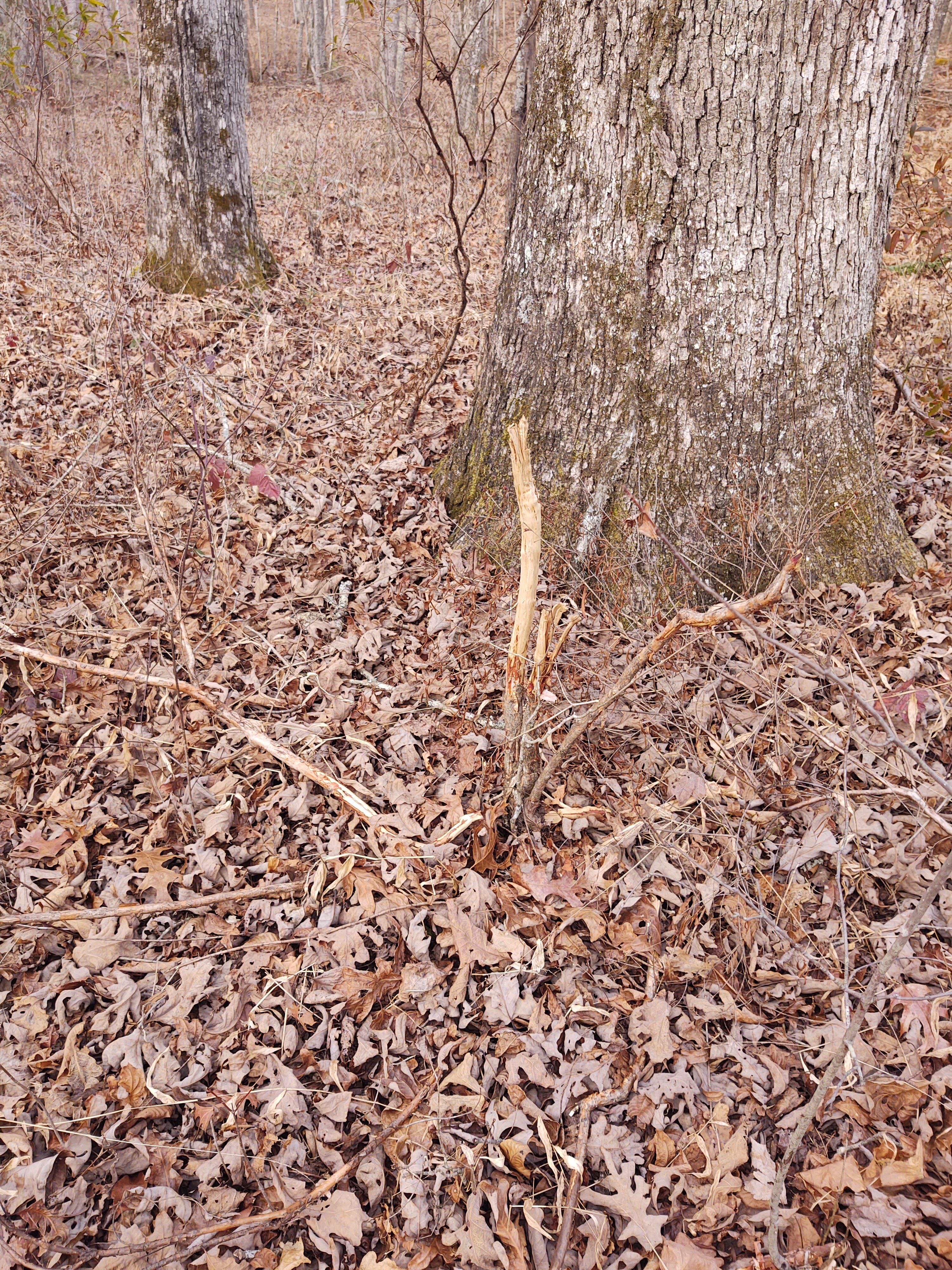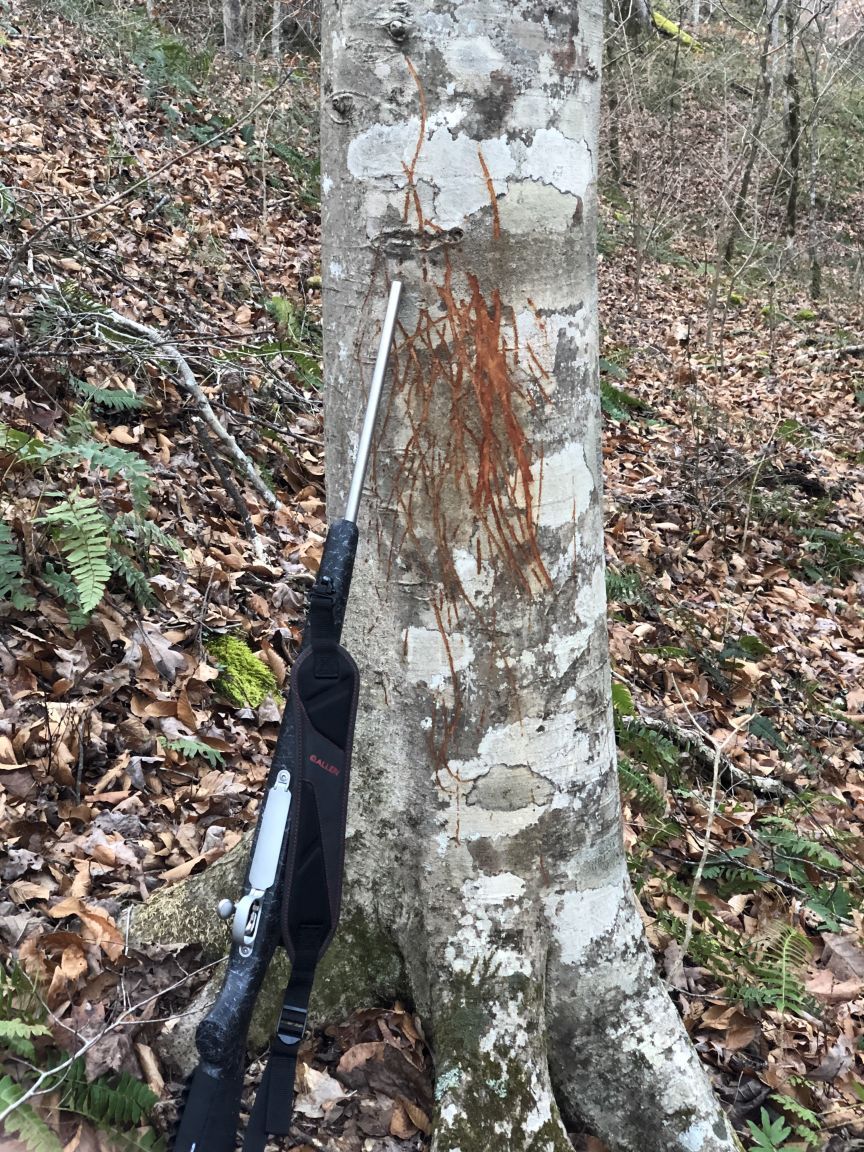
I did a little late season scouting today. I was just thinking I hadn't seen any rubs when I noticed this one. I had been looking at the wrong size trees.
Any speculation on what age/size buck would rub on a tree this large?






What were the species?Back when I did my decade-long rub research program, I found it interesting that as the size of the rubbed tree increased, the list of species bucks used decreased. Rubs on finger sized trees were pretty representative of the species available, but once rubbed trees increased to a couple of inches in diameter, the list of species used dropped to six. For 9+ inch trees, the list was down to just 3 species.
All deer will use it i have seen spikes rubbing on trees bigger than tbey were lolView attachment 63870
I did a little late season scouting today. I was just thinking I hadn't seen any rubs when I noticed this one. I had been looking at the wrong size trees.
Any speculation on what age/size buck would rub on a tree this large?
I would say the original guy was pretty big .but its impossible to know for sureAll deer will use it i have seen spikes rubbing on trees bigger than tbey were lol
Back when I did my decade-long rub research program, I found it interesting that as the size of the rubbed tree increased, the list of species bucks used decreased. Rubs on finger sized trees were pretty representative of the species available, but once rubbed trees increased to a couple of inches in diameter, the list of species used dropped to six. For 9+ inch trees, the list was down to just 3 species.
For 3+ inch trees: maple, poplar, cedar, pine, beech, red oak. For 9+ inch diameter trees: cedar, pine, beech.What were the species?
i know cedar, maybe maple?


Thats Not a deer! 100% sure of it! Mountain lion bobcat or bear! I have seen a mountain lion in cane ridge while hunting before on my old bosses place! So I know and the homeowners in that area no the are there!Seen similar. Never was for certain it was a deer, but assumed it was. Put a camera on the line after finding these, but never had a big deer pass by and no deer rubbed these againView attachment 63897
Seen similar. Never was for certain it was a deer, but assumed it was. Put a camera on the line after finding these, but never had a big deer pass by and no deer rubbed these againView attachment 63897.
.

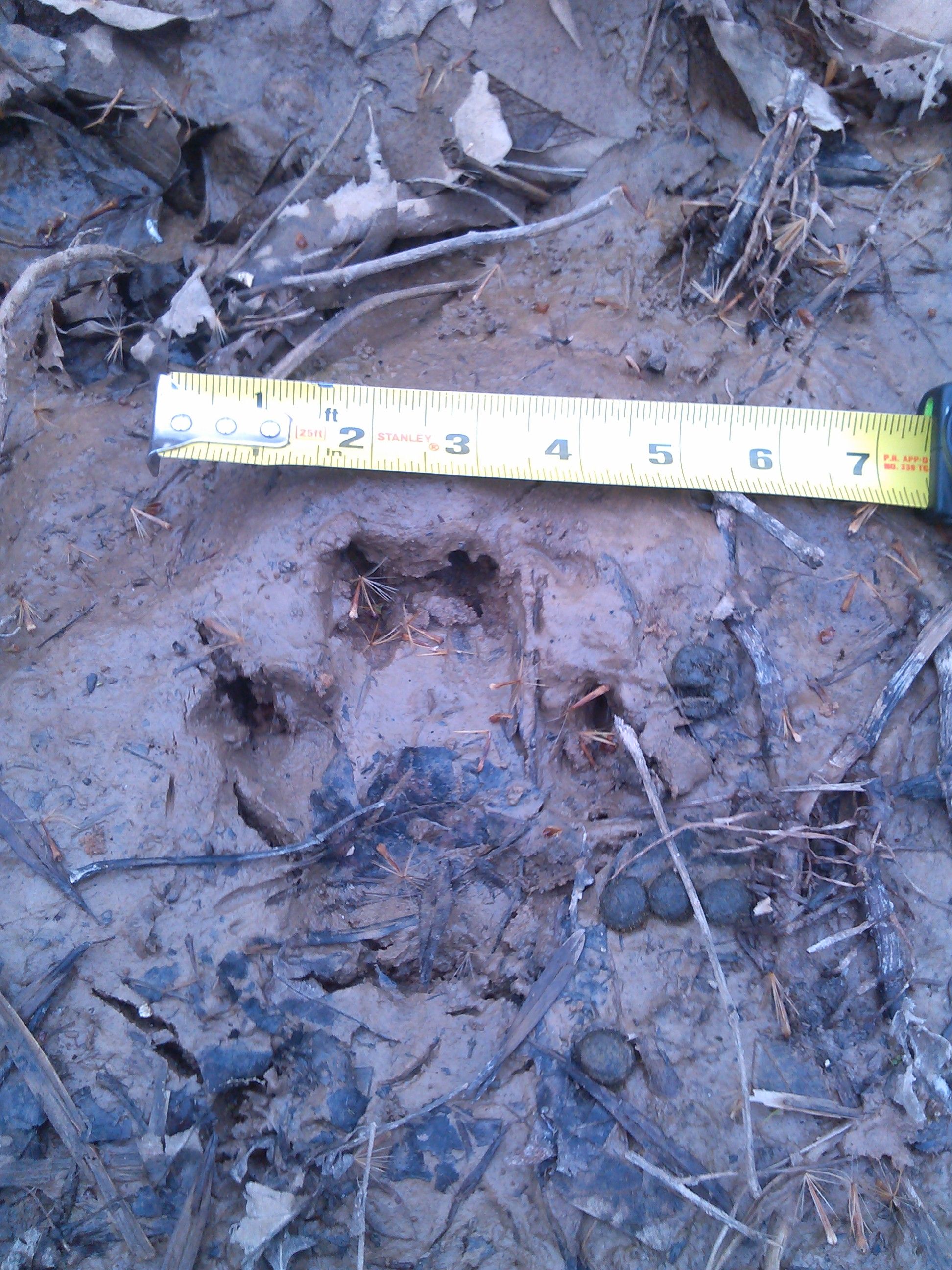
Interesting. A few years before I found these scratches or rubs I found what I thought could have been mountain lion tracks in mud. They were about 4 inches wide, too big to be a bobcat. At that time the stance from the state was denial, "big cats don't exist here and if they did it would be a good thing, they would kill wild hogs". I had pics of those tracks on another phone, but will see if I can find them. I had little doubt before the state reversed its position on the presence of cats that we had one move through these bottoms. We were between some of the confirmed sightings in western part of the state.Thats Not a deer! 100% sure of it! Mountain lion bobcat or bear! I have seen a mountain lion in cane ridge while hunting before on my old bosses place! So I know and the homeowners in that area no the are there!
Managed to find the track pics. The pad with three distinct lobes made me think cat. Size rules out bobcat. These were in 2014. While from everything I have read cats don't usually have their claws out on the ground, seems some "experienced" people say they do sometimes use them to get better traction on surfaces like soft mud. Makes sense.Thats Not a deer! 100% sure of it! Mountain lion bobcat or bear! I have seen a mountain lion in cane ridge while hunting before on my old bosses place! So I know and the homeowners in that area no the are there!

For a decade I ran an extensive study on rub densities and distribution in the ridge-and-hollow hardwoods of western Middle TN. What I found is that rub numbers are highly variable from year to year, and closely linked to acorn production. Big acorn years usually see lots of rubbing. Poor acorn years lead to low rub densities. Others have observed the same thing for studies run in oak-hickory environments. Although no one really knows why, it is assumed to be an "excess energy" thing. In years with abundant acorns, bucks have a lot more high fat foods to eat hence lots of excess energy resources to burn. This may allow them to do a lot more rubbing. In a poor acorn year, no excess energy reserves results in less rubbing.IMO rubs on the place in Giles Co and Lincoln Co. where overrated . While I would find rubs they were almost nonexistent but bucks wasn't , in the east part of the state I could see plenty of rubs but not many bucks so I learned to never be excited to see nor not to get down with rubs as buck sign. Once on the Giles place in one morning hunt in a wooded area I seen seven different bucks using the area I hunted but all out that ridge top to the saddle I was hunting I found only one rub no scrapes .