
You are using an out of date browser. It may not display this or other websites correctly.
You should upgrade or use an alternative browser.
You should upgrade or use an alternative browser.
Are there any advantages to hunting day before, during, or day after cold spell?
- Thread starter Henry
- Start date



megalomaniac
Well-Known Member
Usually really good right before and again right after (once the rain/ wind settles down). Usually bad during the actual front unless you are near a hot doe.

fairchaser
Well-Known Member
Deer are efficient eaters. If they can wait out the cold, they will hunker down until it's over. They will burn calories to stay warm and they must be replaced at some point. They generally will eat right before and right after an extreme weather event. The preference may be before since they don't know if their food source will be available after the event. They also must eat something every 6 hours regardless of the weather. Thus, they may seek bedding near their food source.

UCStandSitter
Well-Known Member
Thursday is the day here. I wouldn't be surprised to seem on their feet and feeding most of the day with the massive cold blast coming.
After a front has seemed to be better for me than before one, but both times are good for seeing deer on their feet. As Fairchaser pointed out a lot of he increased activity likely has a bit to do with food. Being ruminants they have to eat pretty constantly or else they get sick from an imbalance of acids in their stomachs. Being hunkered down eating nothing but browse in their bedding area only gets them so far.
The rapid atmospheric changes associated with a front also cause the deer to get on their feet. It's pretty well documented that deer choose bedding location so they can have sight & thermal vantage to the front and wind to the back. So what's a deer to do when a front rolls in? It flip flops the wind direction and speed, and the temp swing alters the thermals. The security of their bed is suddenly compromised, prodding them to their feet at least until the conditions stabilize or they're forced to hunker down due to the severity of the weather. Then as the front pushes on out the conditions completely change again back to normal, forcing the deer to move yet again. IMO, the most predictable time to see deer on their feet is when the weather is in flux.
The rapid atmospheric changes associated with a front also cause the deer to get on their feet. It's pretty well documented that deer choose bedding location so they can have sight & thermal vantage to the front and wind to the back. So what's a deer to do when a front rolls in? It flip flops the wind direction and speed, and the temp swing alters the thermals. The security of their bed is suddenly compromised, prodding them to their feet at least until the conditions stabilize or they're forced to hunker down due to the severity of the weather. Then as the front pushes on out the conditions completely change again back to normal, forcing the deer to move yet again. IMO, the most predictable time to see deer on their feet is when the weather is in flux.






As an Amazon Associate we earn from qualifying purchases. Product prices and availability are accurate as of the date/time indicated and are subject to change.
BSK
Well-Known Member
A very rapid pressure drop will get deer on their feet feeding. Most extreme case I know of was an experience my old boss had while conducting his PhD research. He was monitoring signpost rubs with the first available trail-cameras with an actual camera. The research property was on the South Carolina coast. Hurricane Hugo was rapidly approaching landfall and as the atmospheric pressure crashed, Grant ran around collecting all his cameras (back then a trail-monitoring unit with a camera cost around $1,500 and he didn't want them destroyed by the hurricane). Grant said mature bucks were standing out in the open wolfing down food as fast as they could. They paid no attention to anything but feeding. He walked right by several of them and they hardly even picked up their heads.
UCStandSitter
Well-Known Member
Just like me on Christmas while my wild injun nieces and nephews throw things and generally misbehave around me. Nothing stops me from suckin down the sweet potato casserole.A very rapid pressure drop will get deer on their feet feeding. Most extreme case I know of was an experience my old boss had while conducting his PhD research. He was monitoring signpost rubs with the first available trail-cameras with an actual camera. The research property was on the South Carolina coast. Hurricane Hugo was rapidly approaching landfall and as the atmospheric pressure crashed, Grant ran around collecting all his cameras (back then a trail-monitoring unit with a camera cost around $1,500 and he didn't want them destroyed by the hurricane). Grant said mature bucks were standing out in the open wolfing down food as fast as they could. They paid no attention to anything but feeding. He walked right by several of them and they hardly even picked up their heads.
A very rapid pressure drop will get deer on their feet feeding. Most extreme case I know of was an experience my old boss had while conducting his PhD research. He was monitoring signpost rubs with the first available trail-cameras with an actual camera. The research property was on the South Carolina coast. Hurricane Hugo was rapidly approaching landfall and as the atmospheric pressure crashed, Grant ran around collecting all his cameras (back then a trail-monitoring unit with a camera cost around $1,500 and he didn't want them destroyed by the hurricane). Grant said mature bucks were standing out in the open wolfing down food as fast as they could. They paid no attention to anything but feeding. He walked right by several of them and they hardly even picked up their heads.
No kidding? That would be an incredible experience. Seems to suggest the sudden change of pressure and atmospheric conditions triggered a feeding frenzy. I've seen that happen with fish, especially as rain changes water temp and level rises and clarity begins to fade. Fish go nuts hitting anything you throw out, as if somebody flipped a switch. Never seen it with deer but I suppose it's probably a pretty natural response that we don't notice so much because of our control of our own environment.
BSK
Well-Known Member
In addition, coastal deer may have developed an adaptation due to exposure to hurricanes and tropical storms. I know the rut timing in the coastal regions of the Carolinas is heavily influenced by tropical storm timing. In fact, I know of two such cases and the reactions are completely the opposite. As the tropical season first starts in early June, historically the two locations most frequently hit are the south TX coast and the Carolina/Georgia coast. In south Texas, the rut is timed (mid-December) so that fawns hit the ground just after this peak time for tropical rainfall. South TX is basically a desert environment, and those much-needed heavy rains in June produce a huge green-up of the environment. Having a big flush of food just as does are giving birth is very advantageous. On the Carolina coast, the reaction is exactly the opposite. June tropical systems tend to produce flooding rains, which is not good for newborn fawn survival. Hence the rut is timed very early (late September into early October) so fawns will be old enough to travel out of the area with their mothers by the time those flooding rains arrive in June.No kidding? That would be an incredible experience. Seems to suggest the sudden change of pressure and atmospheric conditions triggered a feeding frenzy. I've seen that happen with fish, especially as rain changes water temp and level rises and clarity begins to fade. Fish go nuts hitting anything you throw out, as if somebody flipped a switch. Never seen it with deer but I suppose it's probably a pretty natural response that we don't notice so much because of our control of our own environment.
In addition, coastal deer may have developed an adaptation due to exposure to hurricanes and tropical storms. I know the rut timing in the coastal regions of the Carolinas is heavily influenced by tropical storm timing. In fact, I know of two such cases and the reactions are completely the opposite. As the tropical season first starts in early June, historically the two locations most frequently hit are the south TX coast and the Carolina/Georgia coast. In south Texas, the rut is timed (mid-December) so that fawns hit the ground just after this peak time for tropical rainfall. South TX is basically a desert environment, and those much-needed heavy rains in June produce a huge green-up of the environment. Having a big flush of food just as does are giving birth is very advantageous. On the Carolina coast, the reaction is exactly the opposite. June tropical systems tend to produce flooding rains, which is not good for newborn fawn survival. Hence the rut is timed very early (late September into early October) so fawns will be old enough to travel out of the area with their mothers by the time those flooding rains arrive in June.
Nature is so fascinating. Well oiled machine!

TboneD
Well-Known Member
Yesterday I passed several in a field at about 12:45 pm and it made me wonder. Is there something that might prompt critters to get on a big feed before an unusually severe weather event like what we have coming?

Looking at the forecast; I thought Thurs afternoon/evening would be the best time. Predicting rain to start about 8pm where I'm at, and the temps fall off a cliff later Thursday night/early Friday morning.Thursday morning for eTn would be my preference, I have only seen small game go ballistic feeding before a storm, back then we didn't have enough deer to hunt much less observe lol

Wife is taking off work tomorrow, so I plan to go in the morning. I think they will be on their feet ahead of this front. With as cold as it is going to be, a day or two into the deep freeze an open water source may be a good place to hunt if you can find one.
Cool! My wife told me last week she wants to try for a deer so we'll go in the afternoon.Wife is taking off work tomorrow, so I plan to go in the morning. I think they will be on their feet ahead of this front. With as cold as it is going to be, a day or two into the deep freeze an open water source may be a good place to hunt if you can find one.
Please update us with what happens...
She will be home with our kids. She won't be going with me this time, but she has. Wife has killed quite a few deer.Cool! My wife told me last week she wants to try for a deer so we'll go in the afternoon.
Please update us with what happens...
trout
Well-Known Member
Good luck to you and your wife!
woodsman04
Well-Known Member
In my experience it is best before the front and then two days after on normal circumstances.
I also have never had luck nor much camera activity in extreme cold. For me, if it's in the low 20s I don't get a lot of activity. Snow is even worse. Now those days where it's in the teens to low 20s but warms up to 30s in the afternoons are great days.
I suspect this cold blast they hunker down hard for a couple of days before they really have to feed.
I hope I get to hunt a couple of afternoons next week when the warming trend begins.
I also have never had luck nor much camera activity in extreme cold. For me, if it's in the low 20s I don't get a lot of activity. Snow is even worse. Now those days where it's in the teens to low 20s but warms up to 30s in the afternoons are great days.
I suspect this cold blast they hunker down hard for a couple of days before they really have to feed.
I hope I get to hunt a couple of afternoons next week when the warming trend begins.
BSK
Well-Known Member
CRAZY amount of feeding in my food plots during daylight yesterday and today. Even Satan was out feeding in daylight.
Last edited:
So far this morning just a doe and her fawn. Both have clean white tarsals. Been grazing for the past 15 minutes or so. Nice misty dreary morning seems like they should be moving better. If I didn't already have 2 in the freezer and didn't have a lot to do today, I would stay out until mid morning.
Something odd i noticed of my cows and the dogs yesterday. Cows were hitting minerals extremely hard and the dogs were digging and eating dirt. Maybe something to do with the weather coming.
Something odd i noticed of my cows and the dogs yesterday. Cows were hitting minerals extremely hard and the dogs were digging and eating dirt. Maybe something to do with the weather coming.
Dogs were eating enough grass yesterday to make themselves puke; this is very rare for them. This morning; saw 4 muskrats in my pond for the first time. Hopefully both of these are indicators that deer are going to be moving/feeding a lot today.So far this morning just a doe and her fawn. Both have clean white tarsals. Been grazing for the past 15 minutes or so. Nice misty dreary morning seems like they should be moving better. If I didn't already have 2 in the freezer and didn't have a lot to do today, I would stay out until mid morning.
Something odd i noticed of my cows and the dogs yesterday. Cows were hitting minerals extremely hard and the dogs were digging and eating dirt. Maybe something to do with the weather coming.
They are out right this minute in front of my house. Had 5 in the food plot yesterday at noon.November 30 was a sunny cool (not cold) day after several days of rain that worked out for hunting for me, but I'm curious about cold spells. Any thoughts?
And, in case I forget, Merry Christmas.
The work I put in to get plots up and running is paying off now both for me, and for the hungry deer. Oats, rye, turnips, clover. Not much else for them for the next 4 months.
I'm heading out now. The wife can't go because the Christmas guest is showing up late.So far this morning just a doe and her fawn. Both have clean white tarsals. Been grazing for the past 15 minutes or so. Nice misty dreary morning seems like they should be moving better. If I didn't already have 2 in the freezer and didn't have a lot to do today, I would stay out until mid morning.
Something odd i noticed of my cows and the dogs yesterday. Cows were hitting minerals extremely hard and the dogs were digging and eating dirt. Maybe something to do with the weather coming.
However, please don't tell my wife because I don't want her to get jealous, but I literally just brushed my teeth...to go deer hunting.
deerhunter10
Well-Known Member
Both can be good but after Is usually better. In my experience Sharp pressure changes before a storm you will usually have a good hunt. If it is gradually changing its not as good. Anytime generally you get a big temperature swing behind a front will most all the time be good. Even if it's 10 degrees at certain times of the year. This particular front is about a 40 to 45 degree difference. Imo if you have legit food sources tomorrow evening should be rocking if not may be slow. Being how cold it is actually going to get.

Outdoor Enthusiast
Well-Known Member
I laughed at this.Even Satan was out feeding in daylight.
Thanks again for the update.So far this morning just a doe and her fawn. Both have clean white tarsals. Been grazing for the past 15 minutes or so. Nice misty dreary morning seems like they should be moving better. If I didn't already have 2 in the freezer and didn't have a lot to do today, I would stay out until mid morning.
Something odd i noticed of my cows and the dogs yesterday. Cows were hitting minerals extremely hard and the dogs were digging and eating dirt. Maybe something to do with the weather coming.
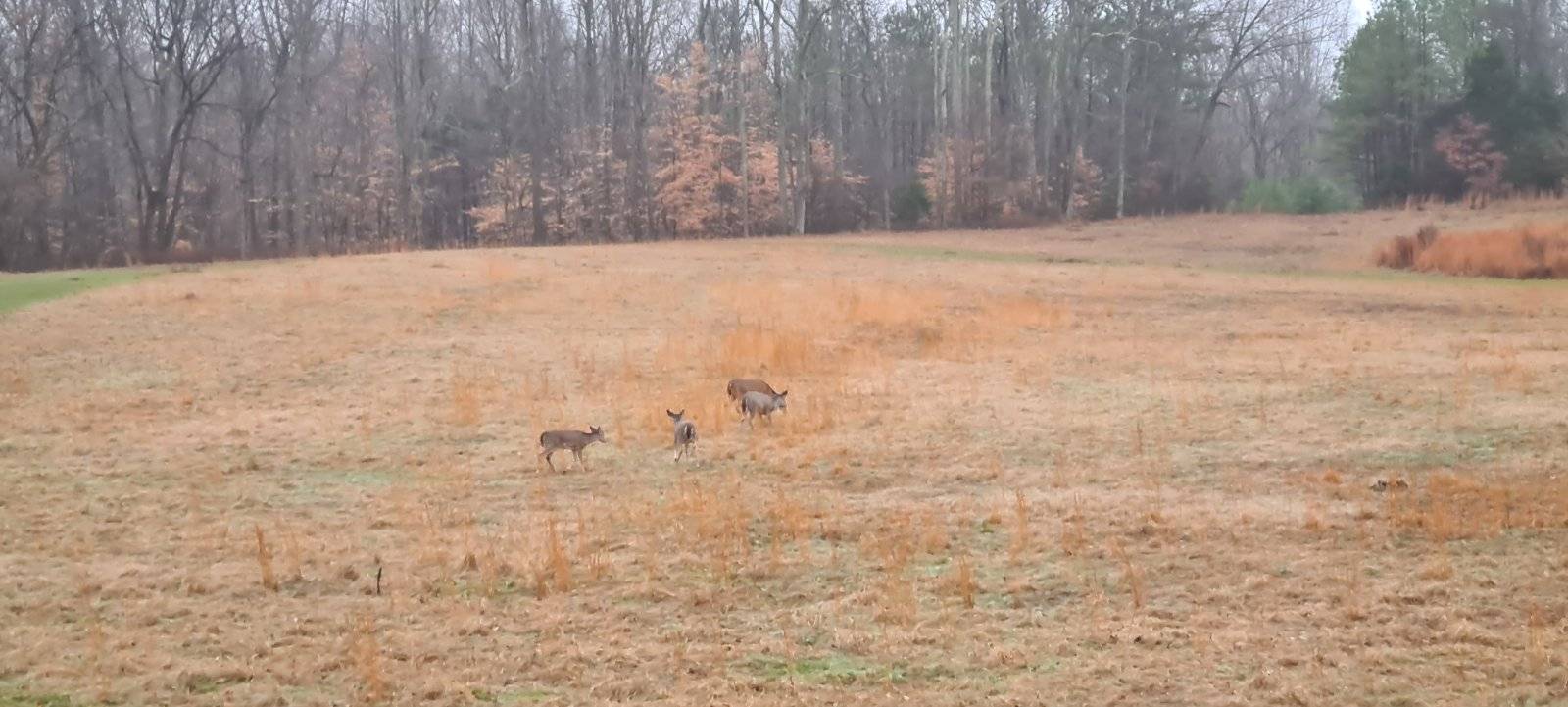
There's an area out on the front of our property the doe seem to run for birthing and raising fawns. We stopped seeing a mom and triplets a few weeks ago so I thought they were gone. But, they turned up in the middle of the property this evening up at one of the fields. Very glad to see them!
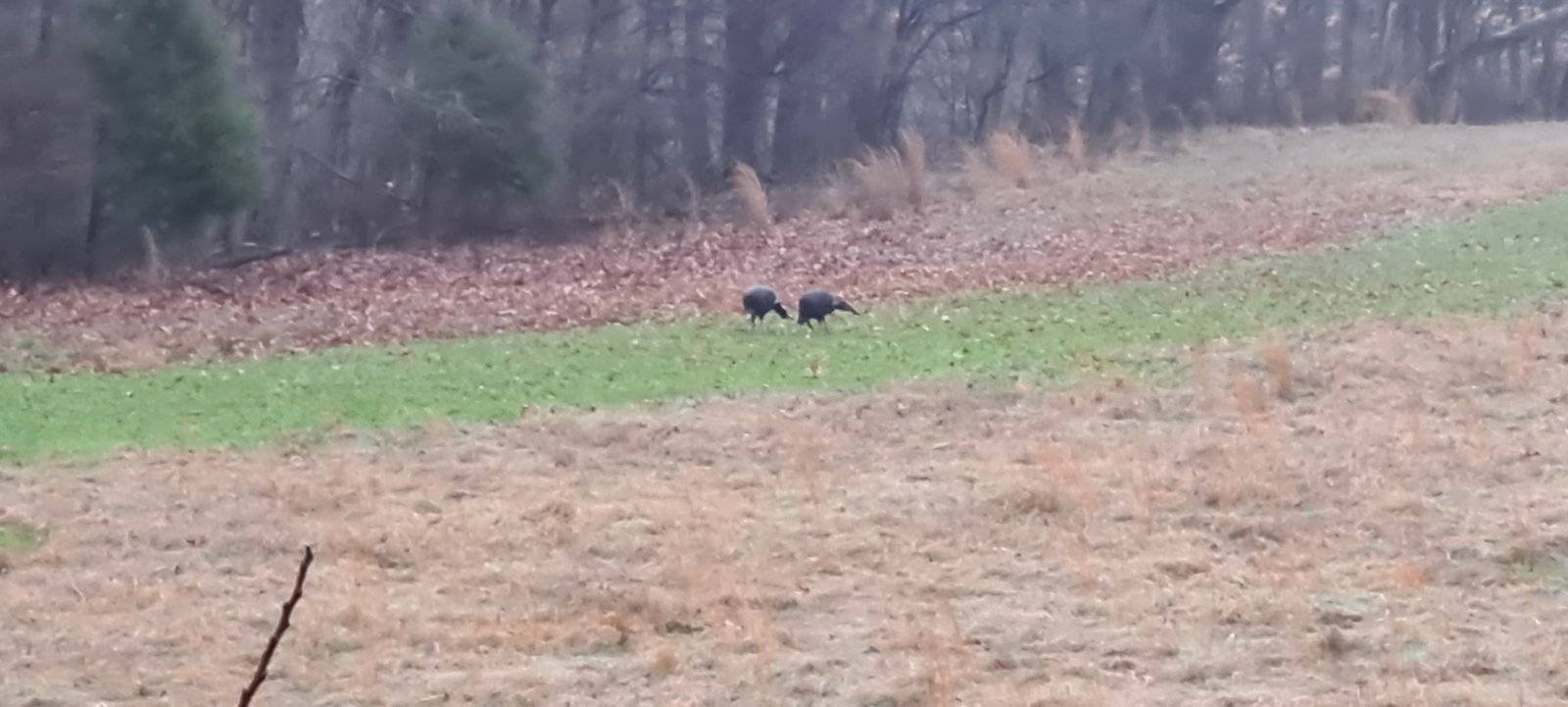
And very thrilled to see two turkey come out and then walk about 20 feet from the blind. I waited on the close up shot until they had gone by so they wouldn't see me move and missed the first one. In the spring we had turkey on the edge of the property that borders on another 200 acres where no one lives/hunts and then we saw some out front, where the doe had their fawns, with chicks in July. The area was hayed and that's when we stopped seeing them. Very glad to see these two today!

Came back to the cabin after dark and decided it might be a good idea to put straw in huge garbage bags and place them around and on the bee hive so they have a better chance of not freezing.
Enjoy the pics. Merry Christmas


