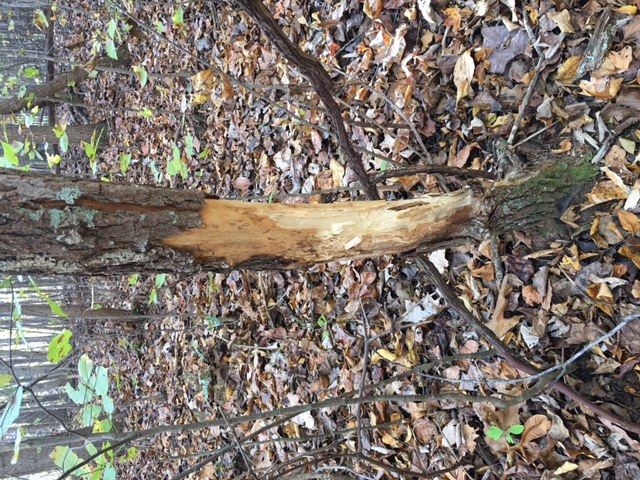
Unless you're looking at a last year's rub there should be fresh shavings on the ground around the rubs found now.
Any rub might be hit by any buck (or doe for that matter) but generally big rubs are made by bigger bucks. I've always read and heard that the first rubs and scrapes of the season are initiated by the older, bigger bucks as well but I don't know if I totally buy into that. I've hunted around rubs and watched them being made from my stand but never just hunted a rub. A rub line does get my attention, especially when they're big and prior to the rut influencing buck movements. I think of it this way... bucks in velvet don't make rubs. Once they come out of velvet they begin but I don't think they go at it hard core enough to create rub lines...yet. About this same time they begin busting up bachelor groups and shifting their ranges. I don't suspect they lay down rub lines during this initial shift but rather once they are settled in. I think the rubs I'm finding now are made by bucks that have shifted into those areas rather than bucks that have shifted out. Now you're hunting bucks that may be around as opposed to bucks that have already vacated those areas. It's my contention that the time frame most rubs are made is after a buck rises from his bed and begins his nightly travels. I'm sure there are plenty of exceptions but I believe that in most cases a rub line leads away from a bedding area and towards a food source or an area he may be checking for does. Once a buck decides to head back towards his bedding area he does so without delaying to make rubs. I also think clusters of rubs (not necessarily a rub line) are found in or near the area a buck is bedding; either made during the time frame he rises and beds and rises and beds throughout the day or during his repeatedly using the same exits from his bedding areas. Random individual rubs can be found anywhere and don't really tell me much about movement or direction other than a buck stopped there. In any event, finding those waste high, thigh sized rubs surely conjure up visions of meeting up with the perpetrator.