
You are using an out of date browser. It may not display this or other websites correctly.
You should upgrade or use an alternative browser.
You should upgrade or use an alternative browser.
Limping deer
- Thread starter BSK
- Start date




deerhunter10
Well-Known Member
Our deer this year are the least aggressive I've ever seen them. Hardly no broken tines.I've been saying the extra aggression this year in the deer is linked to a lack of scraping activities.
BSK
Well-Known Member
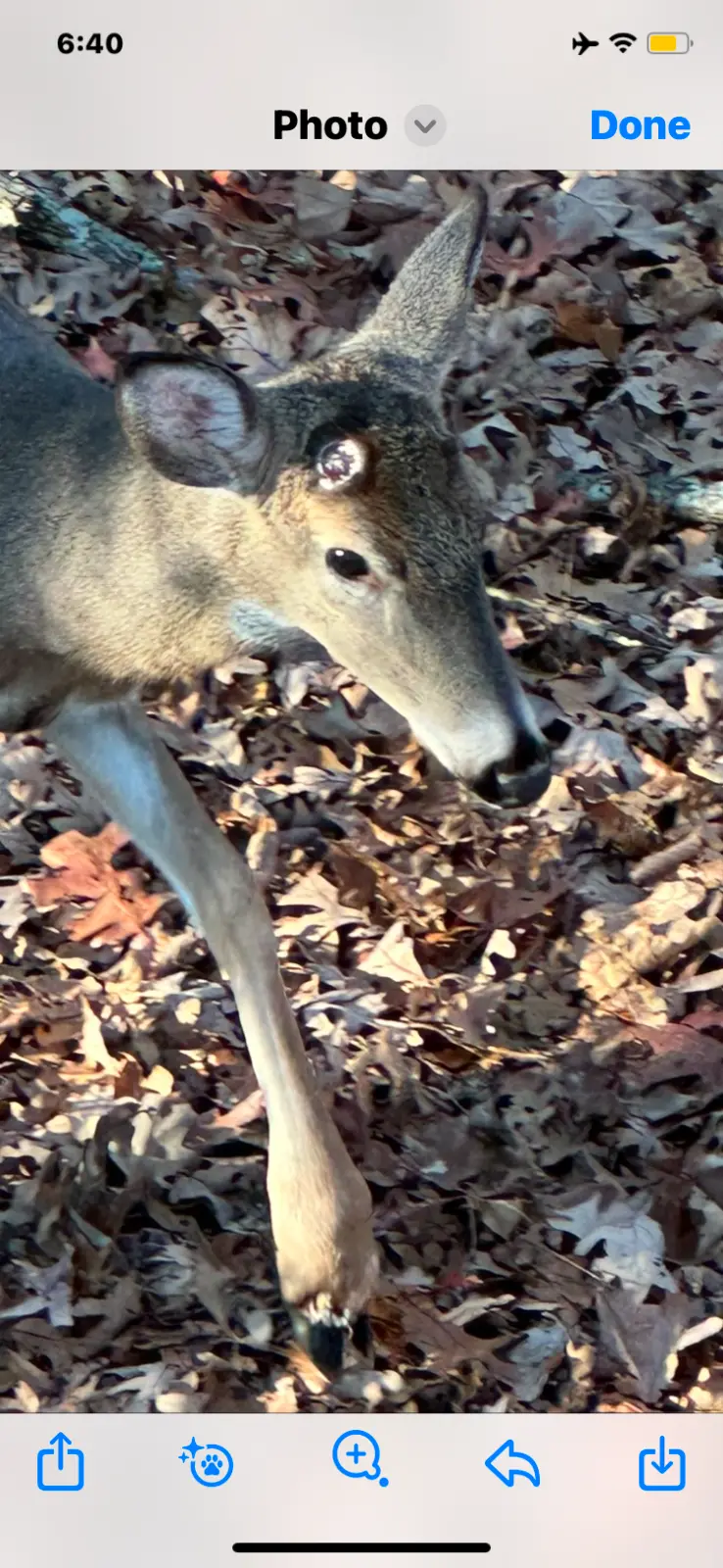
That is troubling Dumluck. Can't say I've seen that in my area, but I've heard you mention it before. The few times we've seen a deer with a foot or hoof problem, upon inspection they had either stepped on something sharp, cutting between their hooves, or it was a deer that had survived EHD and had hoof sluffing.

That could be foot/hoof rot.Dickson county

Yep that's it Mike. That's what I've been seeing and trying to figure out.Dickson county
I've never found anything between the hoofs. Ive always found some type if cut above the hoof but it's usually very light most of the time, not all the way through the hide in some cases. It looks like typical wounds you'd see from a deer running, jumping fences, ect....That is troubling Dumluck. Can't say I've seen that in my area, but I've heard you mention it before. The few times we've seen a deer with a foot or hoof problem, upon inspection they had either stepped on something sharp, cutting between their hooves, or it was a deer that had survived EHD and had hoof sluffing.
Now I have seen EHD damage to hoofs and this is not the same.
The hoof is usually intact, it's the area directly above the hoof just like Mike posted and the bucks always shed early like his picture. I never see those deer again after they shed. We have even shot a couple to put them down and their racks fall off when they hit the ground.
A thought that comes to mind is other areas may be seeing it now because properties that used to not feed are now feeding because the crazy game warden law, they figure they cant get caught. IDK just a thought if it is some kind of foot rot from infected feed sites.
I really wish someone would test a deer to fugure this out. My neighbor kept parts of the deer he put down the other day and I'm working on trying to get TWRA to test it. I actually texted my game warden following up with him before I saw this post.




As an Amazon Associate we earn from qualifying purchases. Product prices and availability are accurate as of the date/time indicated and are subject to change.
BSK
Well-Known Member
Dumbluck,
Reading up on it I believe you are correct that the problem is hoof rot. The description of the symptoms and the images you and others have posted is a perfect match for the disease.
Looking at known causes, I wonder do you have cattle operations nearby? Since many ungulates carry the bacterium in their digestive tract, I suspect deer that are congregating at a feed site or cattle feed site would be highly susceptible to the disease. Wet/muddy ground is also a contributing factor. Deer defecating and churning up the ground at a feeder site would be a perfect transmission spot.
Reading up on it I believe you are correct that the problem is hoof rot. The description of the symptoms and the images you and others have posted is a perfect match for the disease.
Looking at known causes, I wonder do you have cattle operations nearby? Since many ungulates carry the bacterium in their digestive tract, I suspect deer that are congregating at a feed site or cattle feed site would be highly susceptible to the disease. Wet/muddy ground is also a contributing factor. Deer defecating and churning up the ground at a feeder site would be a perfect transmission spot.
JCDEERMAN
Well-Known Member
I'd say more than one would thinkI wonder how many get hurt while running does and just running into holes and stuff like that. I noticed it the past several years running videos to. I just assume most just being older deer just getting wore out like us when we work hard.
BSK
Well-Known Member
AgreeI'd say more than one would think
The most likely cause for foot rot, muddy water sources.Wet/muddy ground is also a contributing factor.
I have dealt with it with cows, the pic Mike posted is consistent with what I would expect it to look like in deer. Giving cows antibiotics will clear it up, unfortunately that's not an option in wild deer herds.
BSK
Well-Known Member
Dumbluck,
Just talked to one of the biologists at the Animal Disease testing facility in Nashville and they said they don't know if anyone does diagnostic bacteria smears for hoof rot simply because it is so easily identifiable visually. I showed them pictures that have been posted here and they said almost certainly hoof rot.
It is not contagious between animals but easily spreads at muddy feed sites.
Just talked to one of the biologists at the Animal Disease testing facility in Nashville and they said they don't know if anyone does diagnostic bacteria smears for hoof rot simply because it is so easily identifiable visually. I showed them pictures that have been posted here and they said almost certainly hoof rot.
It is not contagious between animals but easily spreads at muddy feed sites.

Looks like they have Gout. Maybe from eating fermented corn. Y'all need to keep the still sites cleaned up.Dickson county


Good you have those contacts.Dumbluck,
Just talked to one of the biologists at the Animal Disease testing facility in Nashville and they said they don't know if anyone does diagnostic bacteria smears for hoof rot simply because it is so easily identifiable visually. I showed them pictures that have been posted here and they said almost certainly hoof rot.
It is not contagious between animals but easily spreads at muddy feed sites.
I am not a vet and don't have a biology degree, but have a little experience with animals, kind of called it.

That could be foot/hoof rot.
The most likely cause for foot rot, muddy water sources.
I have dealt with it with cows, the pic Mike posted is consistent with what I would expect it to look like in deer. Giving cows antibiotics will clear it up, unfortunately that's not an option in wild deer herds.

i have a small buck coming in my yard every night to eat supper. He was a 1.5 yr old 4 or 5 point. Now he is a 2pt because he broke one antler off , and somehow broke his front leg.
I am slowly watching his front leg heal up. A couple weeks ago i saw him for the first time limping. As he walked, his front leg was just flopping around. It was a definite break, and was SO painful to watch him try to walk. I figured he would die pretty quick. Its been weeks and now and he shows up about every night. 2 nights ago, for the first time, I saw him gingerly put his foot down and maybe put a tad bit of weight on it.
My neighbor down the road has a dog that likes to chase deer, and after I saw this buck a few times repeatedly, I called him and asked him to tie the dog up for a bit, to give this buck a fighting chance. The last thing I would want to do with a broken leg is to be chased by a dog.
I'll try to download some videos from my security cam to show the progress over the last few weeks.
I am slowly watching his front leg heal up. A couple weeks ago i saw him for the first time limping. As he walked, his front leg was just flopping around. It was a definite break, and was SO painful to watch him try to walk. I figured he would die pretty quick. Its been weeks and now and he shows up about every night. 2 nights ago, for the first time, I saw him gingerly put his foot down and maybe put a tad bit of weight on it.
My neighbor down the road has a dog that likes to chase deer, and after I saw this buck a few times repeatedly, I called him and asked him to tie the dog up for a bit, to give this buck a fighting chance. The last thing I would want to do with a broken leg is to be chased by a dog.
I'll try to download some videos from my security cam to show the progress over the last few weeks.
BSK
Well-Known Member
I think hunters often don't give deer survival ability enough credit. I've seen deer with devastating injuries make it through just fine. I've seen broken limbs, limbs shot off, and even limbs rotted off and the deer are still hopping around years later.i have a small buck coming in my yard every night to eat supper. He was a 1.5 yr old 4 or 5 point. Now he is a 2pt because he broke one antler off , and somehow broke his front leg.
I am slowly watching his front leg heal up. A couple weeks ago i saw him for the first time limping. As he walked, his front leg was just flopping around. It was a definite break, and was SO painful to watch him try to walk. I figured he would die pretty quick. Its been weeks and now and he shows up about every night. 2 nights ago, for the first time, I saw him gingerly put his foot down and maybe put a tad bit of weight on it.
My neighbor down the road has a dog that likes to chase deer, and after I saw this buck a few times repeatedly, I called him and asked him to tie the dog up for a bit, to give this buck a fighting chance. The last thing I would want to do with a broken leg is to be chased by a dog.
I'll try to download some videos from my security cam to show the progress over the last few weeks.

xatxay
Well-Known Member
Exponential increase in armadillo holes may be a contributing factor.I'd say more than one would think
My Dad watched a fawn that had been hit by a car for several years. She had a broken front leg. It dangled and flopped around. Then it turned black. Then it fell off. She lived to 3.5 years old at least. It was never seen after that hunting season. Deer are TOUGH animals.i have a small buck coming in my yard every night to eat supper. He was a 1.5 yr old 4 or 5 point. Now he is a 2pt because he broke one antler off , and somehow broke his front leg.
I am slowly watching his front leg heal up. A couple weeks ago i saw him for the first time limping. As he walked, his front leg was just flopping around. It was a definite break, and was SO painful to watch him try to walk. I figured he would die pretty quick. Its been weeks and now and he shows up about every night. 2 nights ago, for the first time, I saw him gingerly put his foot down and maybe put a tad bit of weight on it.
My neighbor down the road has a dog that likes to chase deer, and after I saw this buck a few times repeatedly, I called him and asked him to tie the dog up for a bit, to give this buck a fighting chance. The last thing I would want to do with a broken leg is to be chased by a dog.
I'll try to download some videos from my security cam to show the progress over the last few weeks.
gladesman60
Well-Known Member
No increase per se but I have always had bucks with broken up racks, limping and with wounds. It's just what they do.I didn't want to highjack Doskil's post "Is this deer injured?" thread, so decided to create another on this topic.
Ever since I started using video trail-cameras instead of still image, I'm blown away by how many bucks - primarily older bucks - that are limping on a front leg by the end of the rut. I'm really shocked by it. At first, I - like most hunters - assumed any buck limping heavily on a front leg had been injured by another hunter or hit by a car. And I'm sure a few have been. Been when you can see no obvious injuries - no bullet or arrow wound, and no obviously broken leg from a car collision - it makes you wonder. Considering we have very little hunting pressure surrounding us, and very little car traffic (like zero) near the parts of the property where we see them most limping bucks, I'm beginning to believe that once you hit a certain density if older bucks, they just end up beating the crap out of each other during the rut. We see plenty of signs of fighting by the end of November: broken tines, broken off beams, and bucks with obvious facial injuries. One of my BILs shot a nice 3 1/2 year-old 7 point (8-point with broken of G3 tine), and the buck's right side of his face was so swollen that his right eye was swollen shut, and it looks like he has a major abscess just under the skin. While skinning him out I found numerous festering antler wounds in the buck's neck and chest.
I'm sure I only started noticing this because of the switch to video trail-cameras, but all this antler damage and limping around seems new. Anyone else noticing a major increase in bucks with battle wounds?
BSK
Well-Known Member
I suspect I'm finally seeing it because we switched to video cameras. Amazing what you notice once you are able to see deer "doing their thing" 24 hours per day.No increase per se but I have always had bucks with broken up racks, limping and with wounds. It's just what they do.

Smo
Well-Known Member
I would think if the swollen legs were from muddy feed sites that the hair in the area would be stained from the mud much like a swamp deers legs are stained.
Unless the leg was cut/ injured previously and became infected causing it too swell.
Unless the leg was cut/ injured previously and became infected causing it too swell.
BSK
Well-Known Member
I think deer injure themselves stepping in root holes and any number of other injury-inducing activities. But I find it interesting I had no limping deer in early October, but a bunch of limping deer by early December. Unless November happens to be National Deer Tripping in Holes Month, I tend to lay the blame on the rut.

DoubleRidge
Well-Known Member
Buck I killed in late November wasnt limping but he did have a large scab healed up on the back of his head. Scars on the side of his neck. Missing a large patch of hair on his brisket and he had busted off one brow tine...but I have videoed two other bucks on our place this year that had a slight limp...but they seem to be doing ok.
Smo
Well-Known Member
BSK , I would say that the deer you're seeing limp now are a direct effect of injury due too fighting during the rut period..
But I agree with them injuring themselves also just bye their nature.
Running at full speed through thickets I don't see how any of them can see much less walk.
But I agree with them injuring themselves also just bye their nature.
Running at full speed through thickets I don't see how any of them can see much less walk.
Last edited:
BSK
Well-Known Member
Once I started keeping track, I'm somewhat amazed at the number of deer that are missing an eye. And it's both bucks and does, so I'm assuming that's just a major risk from running through the woods and brush at top speed.BSK , I would say that the deer you're seeing limp now are a direct effect of injury due too fighting during the rut period..
But I agree with them injuring themselves also just bye their nature.
Running at full speed through thickets I don't see how any of them can see much less walk.

BigAl
Well-Known Member
I've shared this before. My brother once had an opportunity to hunt one of those big pay game ranches in TX. He was told they managed their buck to doe ratio at 1.2 to 1. He said at one time they tried to go to 1:1, but too may bucks were getting killed fighting. This whole conversation came up because they found a good buck that was dead and suspected it died fighting another buck.
I myself have seen plenty of limping bucks, even saw one yesterday. Never seen a limping doe though.
I myself have seen plenty of limping bucks, even saw one yesterday. Never seen a limping doe though.
deerhunter10
Well-Known Member
I was about to say the same thing I get videos and watch all of them. I am shocked at how many does I don't see limping vs bucks.I myself have seen plenty of limping bucks, even saw one yesterday. Never seen a limping doe though.
So I have no good theory anymore.

Biggun4214
Well-Known Member
I could tell numerous stories about the toughness of deer.I think hunters often don't give deer survival ability enough credit. I've seen deer with devastating injuries make it through just fine. I've seen broken limbs, limbs shot off, and even limbs rotted off and the deer are still hopping around years later.
In the early 80's we darted a doe at AEDC that had 3 legs. One of the front legs was completely gone ant the shoulder and healed. She had 2 fawns with her.
I saw another doe that had been hit by a car and dragged around before she got away from the car (I talked with the woman that hit it). Most of the hair was missing and her whole body was covered in road rash. The most amazing thing about her being alive was watching her eat. Her lower jaw was at least 1 1/2 inches shorter than her upper jaw and her tongue hung out of her mouth. She would flip her head to get her tongue out of the was and eat when th her head sideways.
Thank you. My game warden called back and said he had talked to one of the biologist and they said the same thing they thought it was foot rot as well. They might move it up the ladder to see what the state biologist says and what they want to do.Dumbluck,
Just talked to one of the biologists at the Animal Disease testing facility in Nashville and they said they don't know if anyone does diagnostic bacteria smears for hoof rot simply because it is so easily identifiable visually. I showed them pictures that have been posted here and they said almost certainly hoof rot.
It is not contagious between animals but easily spreads at muddy feed sites.
We do have cattle operations around us but we have always have cattle operations around this location and the foot rot issue did not materialize until about 7 years ago. I can go back through trail camera pictures and point out deer I kept track of that got it and died.
We did have a new land manager move in next to this farm that was feeding the deer heavily. I do not know if that practice continues. Once we figured out what we thought it was I had conversations with them and they moved their feed sites to dry ground, they said. We thought the issue was gone but had to put a deer down last week because of it. But when it was bad, it was really bad. I lost all kinds of deer to it. I see it more prevalent in the bucks which makes sense if you know how they get it. I'm assuming the bucks are beat up and cut up more to expose them to the disease which gets in a cut typically.
Smo
Well-Known Member
And some just don't make it….

Wisconsin bucks a Friend of mines Neighbor found on his farm.
Wisconsin bucks a Friend of mines Neighbor found on his farm.

fairchaser
Well-Known Member
Prior to CWD and when we were practicing QDM and trophy management, Ames had a lot of older bucks. These 4 and 5 year old bucks with smaller or average racks would often get busted up in December. It was unusual for a buck with a clean rack to come in and often a shooter buck would become a non shooter due to some big points being broken off as evidenced by cameras. Our so called hit list would start shrinking fast with some being killed and others broken off. If you were after a certain buck, you had better kill him in November or the first week of December. I'm assuming all this fighting resulted from lack of available does to breed.


